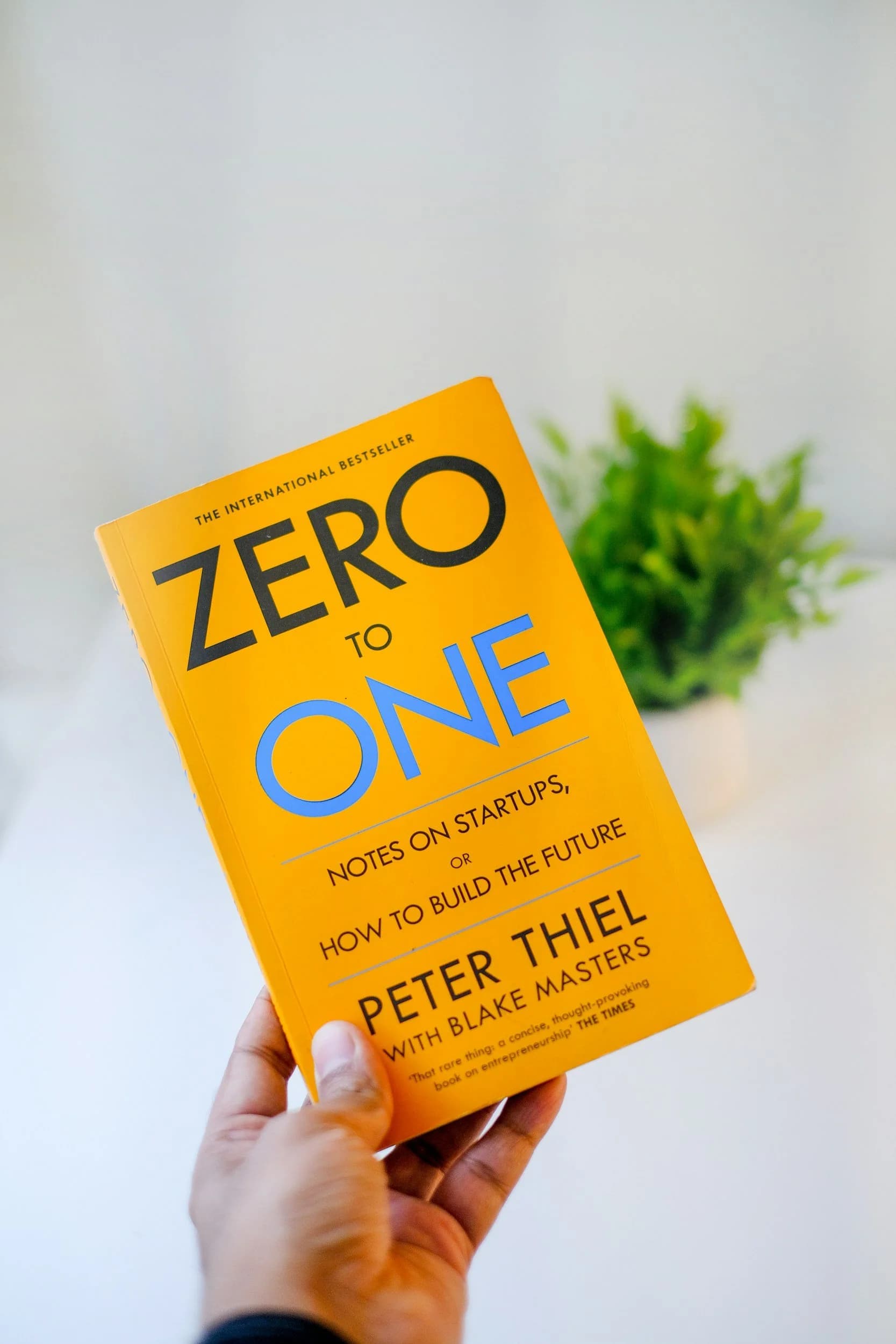
If you’ve worked in tech or games over the past 10 years, you’ve probably heard someone drop the phrase "Zero to One" (yeah, that one, from Peter Thiel’s book. I’ve always felt like there’s a big missing piece in that framework.
See, most of that book is about what it takes to launch a product or company, and don’t get me wrong, that’s cool and helpful and very Silicon Valley. But for people like me, who start lots of projects from literally nothing, the hardest part isn’t launch. It’s getting from idea soup to something real enough to work with. I call this phase Zero to 0.5. Halfway to somewhere.
As a PM, I usually get pulled in right between 0.5 and 1. Some founder or CEO has focused on the 0-0.5 phase, doing the early product stuff themselves, and then realizes, "Wait, we need someone to actually make this happen." That’s usually when I show up.
So this post is for anyone stuck in that weird, messy, early phase. Not idea stage. Not MVP. That weird space in between where everything is vague.
Ok, You’ve Got an Idea. Now What?
Let’s say you’ve got an idea. You’re probably not technical (I’m not). Or maybe you are technical, but you don’t want to do all the work alone. So... what do you do?
This is where most ideas go to die.
I’ve heard thousands of ideas. Literally. They’re fun to talk about. People love them at parties or over drinks. But the second you try to actually make something? Game over. First wave of excuses:
- "It’s not the right time."
- "I can’t code."
- "The market’s too small."
- "There are too many edge cases."
All legit! But here’s the real danger: stopping.
I told myself this early on and I still repeat it all the time:
“If you stop, it means you quit. If you keep going, it just means you’re figuring stuff out.”
So write down the problems. Call out the flaws. But don’t stop. That’s it. That’s the trick.
Let Me Back Up: What Is Side Quest Games?
I’ve been in games for 15 years. I’ve shipped a bunch of stuff. But I’ve never made a game of my own. And I had this moment with my mentor years ago where I said, "I want to run my own studio someday." And then I just... never did. Life, work, all that.
So I finally said screw it and posted on LinkedIn: "Does anyone want to make a game with me?"
And to my surprise, a ton of people said yes. I ended up with ~20 people, all early-career folks or folks between jobs. I told them up front: there’s no funding, we’re doing this for fun and exposure, maybe a portfolio piece, and if we ever launch something, we’ll just split revenue evenly.
The Volunteer Team Lifecycle
Here’s how these projects usually go:
- Excitement Phase: Everyone’s stoked. Ideas are flying.
- Reality Check Phase: Oh wait. This is... a lot of work.
- Pain Cave Phase: This is really hard. People start ghosting.
- Survivors Phase: If you’ve still got a team, congrats. You’ve found your core crew.
We started with 20. We’re down to 7. All awesome, talented people. All still juggling interviews and freelance gigs. Because again, this is a side quest.
The Messy Middle: Team, Tools, and Tech
So once you’ve got the idea, the rough team, and some energy, the "business stuff" starts creeping in: Who owns the IP? Are we an LLC? A studio? What tools are we using? Who’s doing what?
I didn’t want to deal with it. Legal docs feel like bad vibes when you’re just trying to have fun. But eventually, we hit a wall. So here’s what we did:
- Made a game jam agreement + commercialization doc
- Formed an LLC
- Picked tools: Discord (chat), Linear (tasks), Miro (planning), Fellow (notes), Google Hangouts (calls)
- Loosely defined roles and promoted some leads
Not perfect, but enough to keep moving.
Building Without Devs (Yet)
Our dev needed time. So we didn’t wait. We started prototyping with no-code and low-code tools:
- Paper prototyping: Like, actual Post-its and board game pieces.
- Tabletop Simulator: Digital board game sandbox.
- Figma: For UX and flow.
- Unreal blueprints: Quick and dirty logic.
The goal here was to find the fun before we wrote a line of real code. This saved us weeks, maybe months.
Pro tip: don’t waste your dev team’s time. Test ideas as scrappily as possible. Give them clarity, not complexity.
Common Pitfalls From 0 to 0.5
- Don’t depend 100% on dev. Prototype in parallel.
- Don’t expect polished art. Use placeholders or rough sketches.
- Don’t spend weeks debating engines. Timebox the decision.
- Don’t skip playtesting. Get something testable ASAP.
- Don’t assume people have time. Plan around real life.
Wrapping It Up (For Now)
Once you’ve got something playable, tested, and getting actual feedback, you’re past 0.5. From here, you’re into the territory that Zero to One and Hooked talk about: product-market fit, growth loops, go-to-market, and monetization.
So if you’re in the trenches, wondering if your idea is worth it. Just keep going. Keep moving. Keep testing. Even if it’s ugly, even if it’s slow. That’s Zero to 0.5. That’s the hard part. And if you’ve made it this far, you’re already doing better than most.