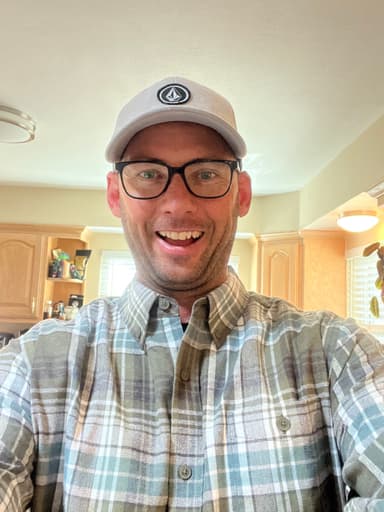
About Me
Most PMs talk about what their teams shipped. I can show you what I shipped. Here's how I got here.
51
Claude Code skills built
10+
Companies shipped at
$50M
Product revenue (Jam City)
150
Pottery Friends beta members
Where It Started
I walked into Zynga in 2009, the same month FarmVille crossed 10 million players. No product experience, no idea what a DAU was. Within a year I was shipping features on FarmVille and building Mafia Wars' first mobile raiding system. The lesson that stuck: obsess over what players actually do, not what the roadmap says they should do.
After four years I'd contributed to some of the biggest titles in social gaming, but I was still a content manager. I wanted to own a product, not feed content into someone else's.
Learning to Own the Outcome
Jam City gave me that ownership. I launched a game and scaled it to 1M+ DAU and $50M in revenue. The insight that stuck: 20% month-over-month revenue growth came from running currency optimizations weekly instead of quarterly. Speed of iteration beat any single brilliant idea. But after scaling one game, I wanted to know what product work looked like at franchise scale, the kind where every decision reaches millions of people.
SUPERLABS (VR gaming, later acquired by Zynga), then Director of Product at Flow State Media where I drove eight straight months of revenue growth. Bandai Namco gave me the PAC-MAN franchise: 10M+ weekly installs, 1M+ MAU, 20% retention improvement. But franchise work means optimizing someone else's vision. I wanted to build from scratch again.
Beyond Games
Big Fish Games deepened my analytics craft: reporting pipeline from scratch, multivariate tests that improved engagement 20% and session length 50%. Then I tested whether PM instincts transfer outside gaming.
AAA answered that. Mobile app to 6M members, $2M saved in annual call center costs, weekly C-Suite strategy presentations. Different domain, same core muscle: understand the user, ship fast, measure what matters.
Betting on Myself
Genies hired me as their first PM. 85-person startup, no product infrastructure, celebrity partnerships (Gucci, GIPHY), everything to prove. I built the creator ecosystem from concept to launch and an e-commerce storefront doing $100K/week.
Mythical Games and Treasure DAO took me deeper into digital marketplaces and developer platforms. Mythical: cross-title game services, +20% retention, +15% revenue. Treasure: quest system, marketplace, new chain on Arbitrum, +20% user base. Then, in November 2024, I was laid off.
Building On My Own
I didn't jump back into the job market. I took a few months to decompress: lifting weights, overhauling my nutrition, fighting through anxiety and depression. And then I started building.
I co-founded Frame Story, a collaborative game studio modeled after Finji and Raw Fury, with recently laid-off developers and designers. Not just a creative project: I incorporated the company, set up banking and payment processing, wrote contributor agreements and IP assignments, and built the financial model from scratch. Five-year projections, investor pitch materials, a SAFE structure at a $3M cap, and a phased fundraising strategy spanning grants (Epic MegaGrant, Wings Fund), angel investors, and a planned Kickstarter.
I designed the go-to-market pipeline for our first title, Cluck: Steam Next Fest demos, indie festival submissions, content creator partnerships, and a marketing roadmap that ties wishlist campaigns to funding milestones. I wrote the 90-day operational plan covering business formation, MVP scoping, community growth, and live ops. Six months in, I was a full founder: zero-to-one with no salary safety net.
I also started freelancing for my local pottery studio, which planted the seed for Pottery Friends. After embedding at the studio six days a week for a year, I identified an unowned vertical: no one has built purpose-built software for craft studio communities. So I built it myself, a native mobile app, marketing site, analytics dashboards, and internal docs, using AI-assisted development with Claude Code to ship production features in days, not sprints.
150 beta members, running structured user testing to validate product-market fit. All of it conceived, designed, built, and shipped by one PM proving that modern AI tooling changes what a single builder can do.
Doing It At Scale
In May 2026 I joined Memorang, an AI edtech infrastructure company, as founding technical PM reporting to the founder. The pitch was the thing I'd spent a year proving I could do: absorb the prioritization and prototyping load at a company with more customer demand than capacity.
I owned launch readiness across four concurrent white-label learning apps built for global testing and credentialing organizations, all converging on the same nine-week window against one shared engineering bench. I wrote the prioritization frameworks the team ran on, built the dashboards that made delivery state legible to partners, and shipped clickable prototypes as living specs instead of handoff documents.
And I built the system that ran my own job: 51 Claude Code skills encoding how the company actually scopes, writes, and reports; 94 memory files holding the context those skills needed; a nightly job that assembled tomorrow's status before I opened my laptop; and a quality gate that graded every outbound write before it landed. Same conviction as Pottery Friends, applied to a company instead of a product. AI tooling doesn't just change what one builder can ship. It changes what one PM can hold.
The Thread
The common thread across 15 years: the best product decisions come from understanding what it actually costs to build. Not from a sprint planning estimate, from building it yourself.
How I Work
I've led cross-functional teams at companies ranging from 85-person startups to organizations with 6M members. I write PRDs that engineers actually want to read, run sprints without micromanaging, and say no to features that don't move the metric that matters. My builder background means I can unblock technical conversations faster than most PMs. I don't need a meeting to understand why a migration is risky or an API design decision matters. That shared vocabulary earns trust with engineering teams quickly.
I prioritize by asking one question: what's the fastest path to learning something we don't know? Discovery and delivery aren't separate phases. They're parallel tracks. I define product success by behavior change, not feature completion. A shipped feature nobody uses is worse than one that was cut because the data said no.
What I'm Looking For
I want a company where product drives growth, not a support function. The right fit: PM owns the outcome, team ships weekly, technical depth matters.
Seed-to-Series B startups in SaaS, dev tools, AI/ML, or consumer platforms. Bay Area, open to remote.
What People Say
“Jon Martin was crucial to the success of Panda Pop, which is currently the number 1 bubble shooter in the world. He is reliable and makes good product decisions based on data and knowledge of the marketplace. He fought to be heard within the company, and argued for changes that ultimately took Panda Pop up a level to the top grossing hit it is today.”
“Jon is a pro at getting things done and a great morale boost to any team. I watched him transition from artist to designer, and quickly learn the ropes and technical wranglings of design and content implementation. He could always be relied upon to get things done, and spot process and tool improvements to increase efficiency.”
“Jon is a great individual to work with and have on your team. He can be counted on to approach his work with charisma and a positive attitude, characteristics that make him a pleasure to work with under pressure. Jon is also a strong creative contributor who can pick up technical tasks with ease.”
“Being able to walk up to Jon's desk has always been a pleasure, he's willing to help in explaining any design questions I've ever had. He's task oriented and keeps to a tight schedule while not cutting corners, he actually helps solves problems. Working with Jon is a great experience personally and professionally.”
“Jon is an accomplished tech artist, UI designer and game designer. I worked with him at Zynga when he was first starting out and he impressed the team with his talent and dedication. Plus, Jon is a great team player.”